





Trade
Overview
TT Platform
Description
Task
Browser Access
Description
Task
Videos
TT Desktop
Description
Task
Videos
Reference
Workspace Windows
Description
Task
Videos
Widgets
Description
Task
Preferences
Description
Viewing Market Data
Time and Sales
Task
Reference
Description
Depth
Description
Task
Reference
Market Grid
Description
Task
Videos
Reference
Product Grid
Description
Task
Reference
Spread Matrix
Description
Task
Videos
Reference
Basic Order Entry
TT Order Types
Description
Task
Videos
Reference
Case Studies
TT Premium Order Types
Description
Task
Reference
Order Ticket
Description
Task
Use Cases
Reference
MD Trader®
Description
Task
Videos
Reference
Order Profiles
Description
Task
Reference
Routing Rules
Description
Task
Blocktrader
Description
Task
Videos
Reference
Trading Crypto on TT
Description
Task
Videos
Reference
Trading on B3
Order Management
Order Book
Description
Task
Reference
Floating Order Book
Description
Task
Reference
Fills
Description
Task
Reference
Positions
Description
Task
Reference
Orders and Fills
Description
Task
Reference
Audit Trail
Description
Task
Reference
Audit Query
Description
Task
Reference
Account List
Description
Task
Videos
Reference
Position Manager
Description
Task
Reference
Alert Manager and Alert Viewer
Description
Task
Videos
Reference
Account & User Restrictions
Description
Task
Reference
Balances
Description
Task
Reference
TT® OMS
Care Orders
Description
Task
Videos
Reference
Lock and Release
Description
Task
Bulking
Description
Task
Videos
Stitching and Splitting
Description
Task
Combining
Description
Task
Order Passing
Description
Task
Use Cases
Order Exceptions
Description
Task
Options
Options on TT
Description
Videos
Options Chain
Description
Task
Use Cases
Videos
Reference
Options Trade Monitor
Description
Task
Videos
Reference
Vol Curve Manager
Description
Task
Use Cases
Videos
Reference
Electronic Eye
Description
Task
Videos
Reference
RFQ Viewer
Description
Task
Videos
Reference
RFQ with Counterparties
Description
Task
Counterparty Manager
Description
Task
Strategy Creation
Description
Task
Use Cases
Reference
Options Risk
Description
Task
Videos
Reference
Options Risk Matrix
Description
Task
Videos
Reference
Watchlist
Description
Task
Videos
Reference
Expiration Manager
Description
Task
Volatility Calculator
Description
Task
TT Uncovered 2.0
Description
Task
TT Uncovered 3.0
Description
Task
QuikStrike
Description
Task
Spread Trading
Autospreader
Description
Task
Use Cases
Videos
Reference
Autospreader Rules
Description
Task
Videos
Reference
Hedge Manager
Description
Task
Videos
Reference
Trading in Yield
Description
Task
Use Cases
Reference
Aggregator
Description
Task
Videos
Reference
Algo Trading
Algo Dashboard
Description
Task
Videos
Reference
Template Manager
Description
Task
Order Management Algos (OMAs)
Autotrader
Description
Task
Reference
Videos
Excel integration with TT
Description
Task
Videos
Reference
Market-Making Algos
Analytics
Charts
Description
Technical Indicators
Task
Videos
Reference
Trader Analytics
Description
Task
Reference
ADL
ADL Overview
Introduction to ADL
Description
Task
Videos
Reference
ADL Basic Concepts
Description
Task
Reference
Building your first algo
Lessons
Advanced concepts
Description
Task
Case Studies
Jump blocks
Group blocks
Virtualized blocks
Library blocks
Trading Blocks
Discrete blocks
Arithmetic blocks
Basic blocks
Logic blocks
Miscellaneous blocks
Setup
Setup Overview
Getting Started
Description
Task
Videos
Reference
Supported Order Types and TIFs
Company Administration
Connections
Description
Task
Videos
Reference
Accounts
Description
Task
Videos
Use Cases
Reference
Users
Description
Task
Videos
Reference
Company
Description
Task
Reference
Order Tag Defaults
Description
Task
Account Administrators
Description
Task
TT Premium Services
Description
Task
TT Access
Description
Task
Advanced Features
Description
Risk Management
Risk Administration
Description
Task
Risk Limits
Description
Task
Videos
Reference
Pre-Trade Portfolio Risk
Description
Task
Reference
Order Cross Prevention
Description
Task
Videos
KRM Limits
Description
Task
TT® OMS
TT OMS Administration
Description
Task
Use Cases
Reference
Exchanges: Americas
B3
Description
Task
CBOE
Description
Task
Cboe FX
Description
Task
Reference
CFE
Description
Task
CME
Description
Task
Dealerweb
Description
Task
EBS Direct
Description
Task
EBS Market
Description
Task
Fenics
Description
Task
FMX
Description
Task
FMX_USTF
Description
Task
Goldman Sachs Commodity Blocks (GSCB)
Description
Task
Referece
ICE
Description
Task
MexDer
Description
Task
MIAX_FUT_CH
Description
Task
MIAX_FUT_NY
Description
Task
MX
Description
Task
Nodal
Description
Task
NFI
Task
Exchanges: EMEA
ATHEX
Description
Task
BIST
Description
Task
DGCX
Description
Task
EEX
Description
Task
EPEX SPOT
Description
Task
Reference
Eris
Description
Task
Eurex
Description
Task
Videos
Euronext
Description
Task
GFO-X
Description
Task
ICE_L
Description
Task
JSE
Description
Task
LME
Description
Task
LME NTP
Description
Task
LSE
Description
Task
MEFF
Description
Task
NDAQ_EU
Description
Task
NASDAQ_NED
Description
Task
Nord Pool
Description
Task
Reference
WSE
Description
Task
Exchanges: Asia/Pacific
ABX
Description
Task
ASX
Description
Task
FEX
Description
Task
HKEx
Description
Task
JPX
Description
Task
NSE
Description
Task
NZX
Description
Task
SGX
Description
Task
SGX GIFT
Description
Task
TAIFEX
Description
Task
TFEX
Description
Task
TFX
Description
Task
CoinFLEX
Task
Exchanges: Crypto
Coinbase
Description
Task
Kraken
Description
Task
FIX Support
FIX Ruleset
Description
Task
FIX Sessions
Description
Task
Secondary Accounts
Description
Task
Monitor
TT Mobile
TT Backtesting
APIs
TT REST API 2.0
Getting Started
API Reference
TT REST API 2.0 (UAT)
Getting Started
API Reference
TT .NET SDK
Getting started with TT .NET SDK
Creating the application framework
Working with instruments
Subscribing for market data
More about prices
An in-depth look at the Price class
Working with orders and fills
Handling trade subscriptions
Working with trade subscriptions
Working with Algos
Algo Server
TT Order Types
TT Premium Order Types
Advanced Concepts and Options
Appendix
TT CORE SDK
Getting Started with TT Core SDK
Creating Application Framework
Working With Instruments
Subscribing for Market Data
Working with Orders and Fills
Creating a TT Application Server
Appendix
TT Trade Surveillance
Overview
Using TT Trade Surveillance
Cluster View
Core Models
Market Abuse Models
Cross Product Models
Spoofing Models
Improperly Matched Trade Models
Market Rate Models
Trading Behaviors Models
Miscellaneous Models
Configurable Models
Reports
Reference
TT FIX Services
TT FIX General
Getting Started
FIX Message Structure
Session messages
TT FIX Order Routing
Overview
TT FIX message conversations
Supported application messages
TT FIX Market Data
Overview
TT FIX message conversations
Supported application messages
TT FIX Drop Copy Out
Overview
TT FIX Message Conversations
Supported application messages
Compliance Feed messages
TT FIX Drop Copy In
Overview
Supported application messages
TT FIX Gateway
Getting Started
FIX Message Structure
Components
Session messages
Price Gateway Messages
Order Gateway Messages
TT FIX Recovery
Overview
FIX Recovery Methods
Supported application messages
Compliance Feed Messages
MiFID II Support

Managing users

On this page

To manage users in your company, the Users tab provides you the ability to do the following:

Change a user profile

You can change the following on the Users | Profile tab:

  • Contact information
  • User status: Deactivating a user or re-inviting a user
  • Trade mode (e.g., TT Pro)
  • Access to advanced options features
  • Ability to create REST API keys
  • User Groups
  • Company Relationships

To change a user profile:

  1. Click Users from the left navigation pane.

    The Users data grid appears.

  2. Select a user from the grid or enter a user name in the Search box.

    The user’s Profile tab is displayed.

  3. Make the necessary changes in each section on the Profile tab and click Save.
  4. For more details about each section, refer to Adding a New User.

Cloning a user

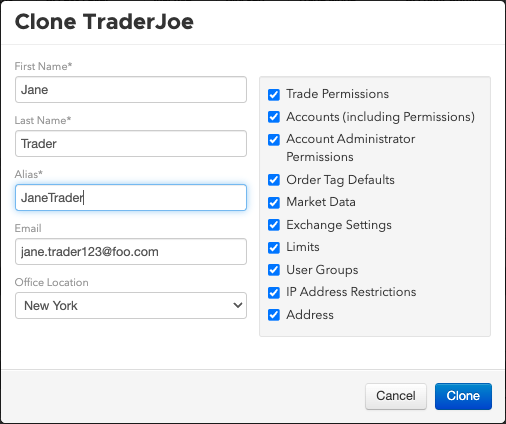
You can clone (copy) a user’s settings for a new user and add them to your company using the Clone button.

To clone a user:

  1. Click Users from the left navigation pane.

    The Users Grid appears.

  2. Select a user from the Grid or enter a user name in the Search box.
  3. Click the Clone button.
  4. Complete the form and uncheck any options that you do not want to clone (e.g., Trade Permissions). All options are checked by default.
  5. Click Clone.

    The cloned user’s profile appears on the Users screen.
Deleting a user

You can only delete a user that belongs to your company. When you delete a user, they are no longer visible in your company’S Users Grid and are no longer visible to any companies with whom they were shared. They also cannot use any of the company’s resources. However, their profile and settings remain in the TT system.

Note: If the user has an invitation pending, the deletion automatically revokes the invitation.

To delete a user:

  1. Click Users from the left navigation pane.

    The Users Grid appears.

  2. Select a user from the Grid or enter a user name in the Search box.
  3. Click the Profile tab.
  4. Click XDelete at the top of the user’s profile screen.

    The deletion is recorded in the change log on the Reports tab in the left navigation pane.

Deactivating a user

You can deactivate any user in your company. When you deactivate a user, the user cannot log in to trade via the TT platform, and does not have access to your companies’ resources or any resources of companies with whom the user is shared.

If users are shared with a company and the shared company deactivates them, those users cannot log in and access other companies with whom they are active. These users also cannot access the shared company that deactivated them.

To deactivate a user:

  1. Click Users from the left navigation pane.

    The Users Grid appears.

  2. Select a user from the list or enter a user name in the Search box.
  3. Click the Inactive checkbox in the Status section.

    The user name appears grayed out in the bottom portion of the Users List with the word “INACTIVE” displayed.

Setting an internal company user

As an administrator, you can flag certain users as direct employees of your firm by checking the Internal Company User checkbox under User | Profile | Status. This setting can distinguish your direct employees from your customers who who have accepted invites to trade with your company, but are not employees of your firm.

To set an internal only user:

  1. Click Users from the left navigation pane.

    The Users Grid appears.

  2. Select a user from the list or enter a user name in the Search box.
  3. Click the Internal Company User checkbox in the Status section.
  4. Click Save Changes.

Re-inviting a retired user

You can re-invite users that were retired due to having accepted another company invitation. When the user re-joins, the user’s original workspaces and preferences will be restored. Retired users will remain with the other company until they accept your invitation.

Note: An active user with your company reverts to a provisional user when they join another company. Their invitation status changes to “Invitation Status: Permanently Retired” and you can no longer re-invite or revoke the invitation. However, the user’s settings remain in your company database and are configurable and transferable.

To re-invite a retired user:

  1. In the Users data grid, select a retired user.
  2. Click the Profile tab.
  3. In the Status section, click Re-invite Retired User.

    Note: Only the TT account used to accept the original invitation may be used to accept the re-invitation.

Viewing login history

Use the Login History tab on the User’s screen to view a user’s history of logging in to the TT platform. You can view the login history of your company users, as well as users shared with your company.
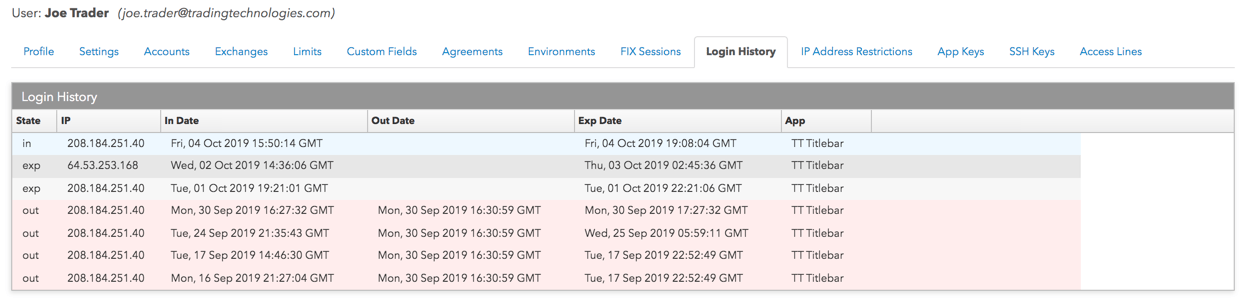
To view user login history, select a user in the data grid and click the Login History tab. The Login History section includes the following columns:

  • State — Shows the status of the user’s session:
    • in: The user has logged in to TT and the session is active.
    • out: The user has logged out of TT.
    • exp: The user’s token has expired.
  • IP — The IP address of the user’s session.
  • In Date — The time and date the user logged in to the TT platform.
  • Out Date — The time and date the user logged out of the TT platform.
  • Exp Date — The time and date the token issued at login expires. When the user logs in, the token is issued and is valid for one hour. If the user is actively logged in, the token renews every hour. If the user is not active, the token may expire before the user logs out of the platform.
  • App — The application used for logging in to the TT platform.

Managing Environments for a User

As a company administrator, you can use the Environments tab to view, add, or remove trading environment access (e.g., simulation, production, uat, etc.) to users in your company. Non-administrative users do not have access to this tab.
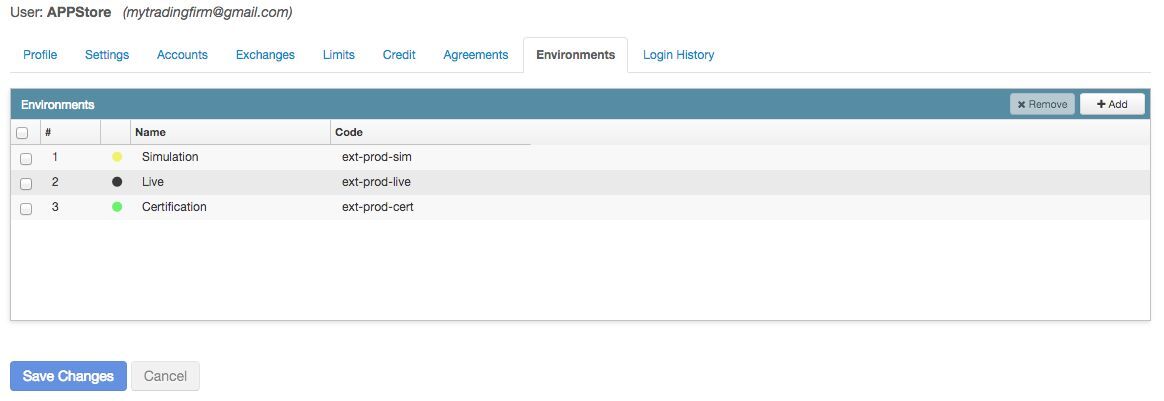
To manage environments for a user…

  1. Click the Environments tab.
  2. To add user access to an environment, click Add.
  3. To remove user access to an environment, click the checkbox next to the environment and click Remove.